
ONKORE Payments Intelligence
SNAP EBT Modernization: Preparing Your POS for Chip and Tap Cards
The USDA is rolling out chip and tap-enabled SNAP EBT cards to combat fraud. Learn how to update your POS system and ensure transaction continuity.
What Happened
SNAP EBT Modernization: Preparing Your POS for Chip and Tap Cards
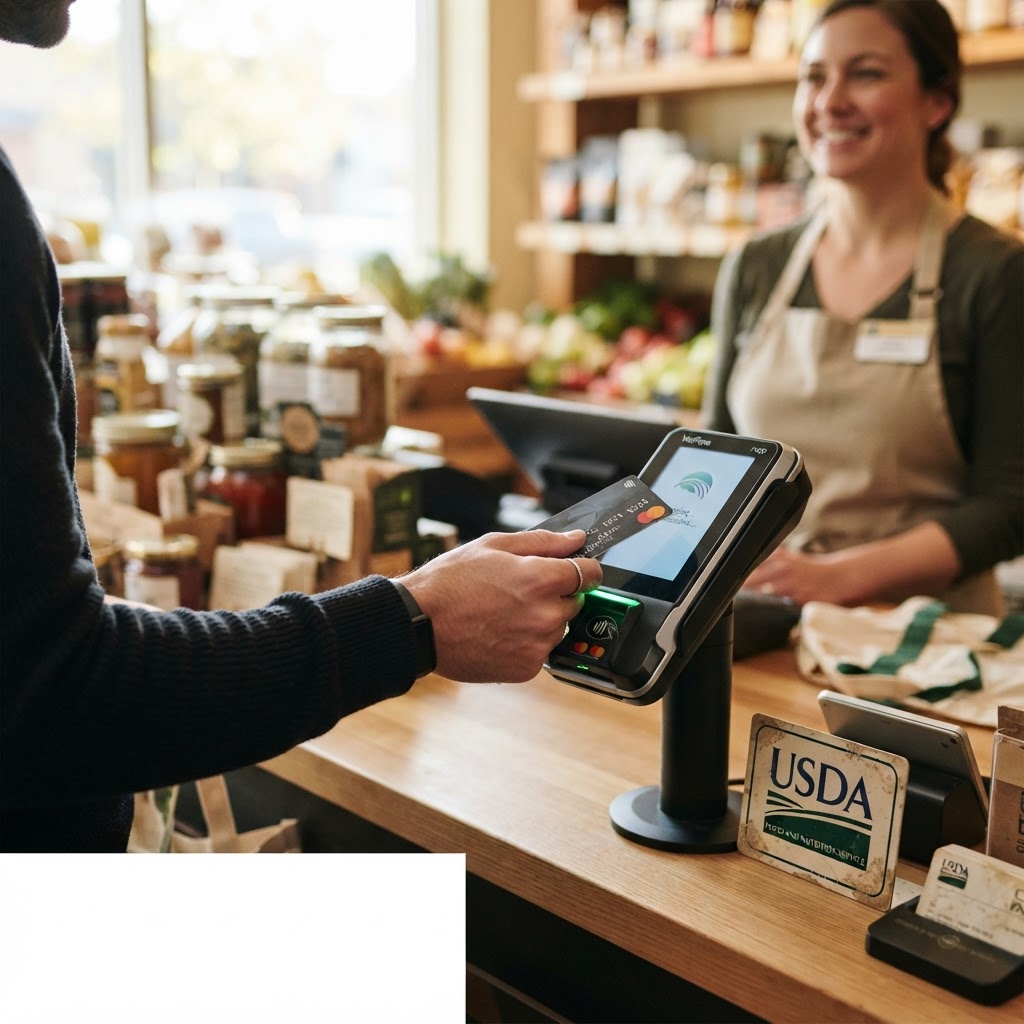
The landscape of Electronic Benefits Transfer (EBT) is undergoing its most significant transformation in decades. The United States Department of Agriculture (USDA), through the newly renamed Food and Nutrition Administration (FNA), has initiated a nationwide rollout of chip and tap-enabled SNAP EBT cards. This move, aimed at curbing the rampant rise of card skimming and benefit theft, requires immediate attention from every SNAP-authorized retailer in the United States. As a merchant, understanding the technical requirements and operational shifts is critical to ensuring that your customers can continue to redeem their benefits without interruption.
The Drive for Enhanced Security
For years, SNAP EBT cards have relied exclusively on magnetic stripe technology. While functional, this legacy system has become a primary target for sophisticated criminal networks. According to the SNAP EBT Modernization | Food and Nutrition Administration, EBT fraud—specifically card skimming—is on the rise. Skimming involves placing illegal devices on payment terminals to capture card data and PINs, which are then used to clone cards and drain benefits. The impact is devastating for participants who rely on these funds for their monthly grocery budgets, as noted in SNAP Skimming Resources - Office of Inspector General.
To combat this, the FNA is adopting the EMV (Europay, Mastercard, and Visa) chip standard, which is the global benchmark for secure electronic transactions. Unlike magnetic stripes, which contain static data that is easily copied, the microchip on the new EBT cards generates a unique, one-time code for every transaction. This code must be verified by the EBT system before authorization, making it nearly impossible for fraudsters to use stolen data for cloned card transactions, as explained in Massachusetts to Launch EBT Chip Cards to Prevent SNAP Theft, Protect Tax Dollars | Mass.gov.
Technical Specifications for Retailers
The transition to chip-enabled EBT is not merely a card replacement program; it requires a coordinated update of the nation’s retail Point-of-Sale (POS) infrastructure. There are two critical technical components that merchants and their POS providers must address:
- Service Code 220: The magnetic stripe on the new chip-enabled cards will include a specific service code (220). This code informs the POS terminal that the card is equipped with a chip. If a customer attempts to swipe a new card, the terminal should recognize this code and prompt the user to insert or tap the card instead.
- Application ID (AID): The payment application residing on the EBT chip uses a specific Application ID: A0000000044542. POS systems must be programmed to recognize this AID to process the transaction via the chip reader, as detailed in Supporting New SNAP EBT Chip Cards: Overview and Next Steps.
If a merchant’s POS system has not been updated to recognize this AID, the terminal will likely return an "Empty Candidate List" (ECL) error when the chip is inserted. This is where the concept of "fallback" becomes vital.
The Critical Role of Fallback (ECL)
During this transition period, it is imperative that retailers ensure their POS systems support "fallback" to magnetic stripe transactions. In technical terms, this is often referred to as Empty Candidate List (ECL) fallback. If a chip card is inserted into a terminal that does not yet support the EBT AID, the system must allow the transaction to proceed via a magnetic stripe swipe to avoid a total transaction failure.
As stated in the SNAP EBT Chip and Tap Cards are Coming Soon | Food and Nutrition Administration notice, retailers must ensure their systems allow for this fallback until full chip support is implemented. Failure to configure fallback correctly could lead to legitimate SNAP participants being unable to purchase food, even if they have a valid card and sufficient balance.
State Rollout and Timelines
The rollout is occurring in phases across different states. For instance, Massachusetts began notifying retailers in early 2026 to prepare for a pilot program, with full issuance starting later in the year (Massachusetts to Launch EBT Chip Cards to Prevent SNAP Theft, Protect Tax Dollars | Mass.gov). Similarly, New Jersey launched a pilot in specific counties in July 2026 (Department of Human Services | Human Services Launches EBT Chip Card Pilot).
Retailers should be aware that even if their specific state has not yet begun issuing chip cards, they may encounter them from out-of-state customers. SNAP benefits are portable, and a chip card issued in one state must be usable at any SNAP-authorized retailer nationwide. Some states have set deadlines as early as December 1, 2026, for retailers to have the necessary equipment to accept these cards (Chip Enabled Electronic Benefits Transfer (EBT) | OTDA).
What Merchants Should Do
To ensure a seamless transition and protect your customers' ability to shop, ONKORE recommends the following immediate actions:
- Contact Your POS Provider: Reach out to your POS service provider or Third-Party Processor (TPP) immediately. Ask specifically if your current hardware and software support the EBT AID (A0000000044542) and if the system is configured for ECL fallback.
- Test Your Systems: Work with your provider to conduct testing. Confirm that when a chip-enabled EBT card is used, the system either processes the chip correctly or successfully falls back to the magnetic stripe without error, as suggested in Supporting New SNAP EBT Chip Cards: Overview and Next Steps.
- Train Your Staff: Cashiers should be trained to recognize the new cards, which may feature updated designs, expiration dates, and 3-digit security codes on the back (Department of Human Services | Human Services Launches EBT Chip Card Pilot). Staff should instruct customers to attempt an insert or tap first, and only swipe if the terminal prompts them to do so.
- Monitor for Failures: If a transaction fails, staff should be instructed to print a duplicate receipt or record the error code and time of the transaction. This information is vital for troubleshooting with your POS provider (Retailer Instructions for SNAP EBT Chip Card Transactions at Point of Sale | Food and Nutrition Service).
- Evaluate Tap-to-Pay: While the FNA strongly encourages accepting EBT tap payments, it is not currently a mandatory requirement. However, enabling tap-to-pay can speed up checkout lines and provide a more modern experience for your customers.
ONKORE Perspective
The modernization of SNAP EBT is a long-overdue alignment of government benefit programs with commercial payment standards. For merchants, this transition represents both a technical challenge and a strategic opportunity. By proactively updating POS systems, retailers not only comply with federal guidance but also play a crucial role in protecting the most vulnerable consumers from financial theft. At ONKORE, we view this as part of a broader trend where the distinction between "government payments" and "consumer payments" is disappearing. Merchants who embrace these security standards early will reduce their operational friction and build deeper trust with their community members who rely on SNAP benefits. The shift to EMV for EBT is not just about fraud prevention; it is about ensuring the resilience and integrity of the entire retail food ecosystem.
By staying ahead of the December 2026 deadlines and ensuring fallback capabilities are active today, you protect your revenue and your customers' well-being.
Trust & Sources
Reviewed by: ONKORE Payment Solutions editorial team
Published: September 12, 2026
Last updated: September 12, 2026
Source authority: USDA Food and Nutrition Administration