
ONKORE Payments Intelligence
The 97% Milestone: What the Near-Total Adoption of EMV Means for US Merchants
EMVCo reports that 97% of in-person payments are now chip-authenticated. Learn how this milestone impacts fraud liability and security for US retailers.
What Happened
The 97% Milestone: What the Near-Total Adoption of EMV Means for US Merchants
The global payments landscape has reached a definitive turning point. According to recent data from EMVCo, 97% of all card-present transactions are now EMV-enabled. This milestone is supported by a massive infrastructure of over 15.6 billion EMV cards in circulation and more than 11,000 approved products globally. For U.S. merchants, this represents the near-total transition from legacy magnetic stripe technology to a more secure, interoperable standard.
As a merchant in the United States, understanding the implications of this 97% adoption rate is critical. It is no longer just about following a trend; it is about operating within a matured ecosystem where the risks of non-compliance are higher than ever.
The Evolution of Payment Security
For decades, the magnetic stripe was the primary method for processing card payments. However, magnetic stripes store static data that is easily copied or "skimmed" by fraudsters to create counterfeit cards. EMV technology—named after its original developers Europay, Mastercard, and Visa—was designed to solve this vulnerability.
Unlike the static data on a magnetic stripe, an EMV chip transaction requires a sophisticated exchange of information between the chip and the terminal. As noted by NRS Pay, each transaction generates a unique, dynamic code. This dynamic authentication makes it nearly impossible for criminals to use stolen data to create a functional counterfeit card for in-person use.
In the U.S., the adoption rate has mirrored global trends. Data from CoinLaw indicates that by 2025, 96.2% of card-present transactions in the U.S. were processed using EMV chip technology. This shift has led to a dramatic reduction in counterfeit fraud; early reports from Visa showed that merchants who completed the chip upgrade saw counterfeit fraud dollars drop by as much as 58%.
The Reality of the Liability Shift
The most significant business impact of EMV adoption is the "liability shift." Before the widespread adoption of EMV, card issuers typically absorbed the costs associated with fraudulent transactions. Today, that responsibility has shifted.
According to EVO Payments, the financial liability for counterfeit fraud losses now falls on the party that is the least EMV-compliant. If a customer presents a chip card but the merchant only has a magnetic stripe reader, the merchant is held responsible for any resulting fraud. With 97% of transactions now being chip-enabled, a merchant still relying on "swiping" is an outlier and a primary target for fraudulent activity.
The Rise of Contactless and Mobile Payments
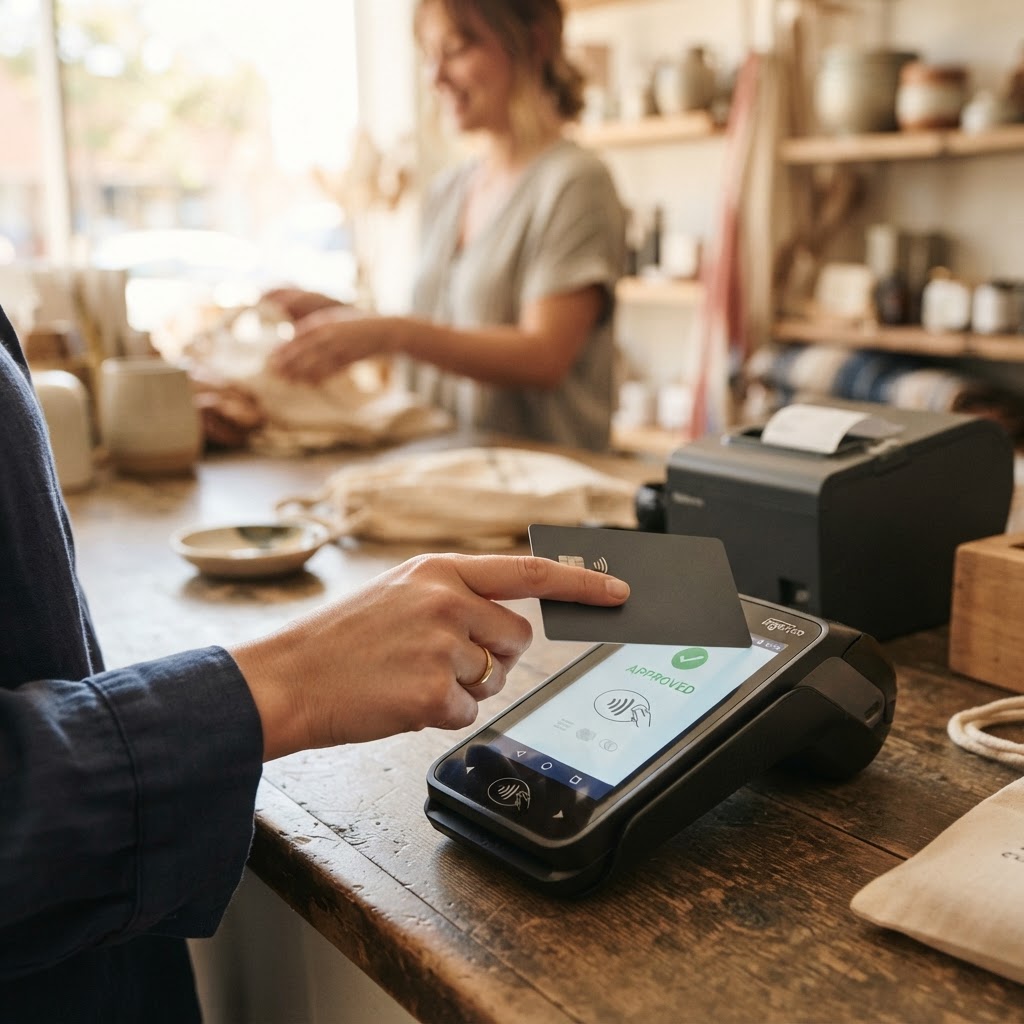
EMV technology is not limited to physical chip insertion. It also provides the foundation for contactless (NFC) payments and mobile wallets like Apple Pay and Google Pay. EMVCo emphasizes that these technologies enable payments to work seamlessly across in-store and remote environments.
The benefits of moving toward contactless EMV are measurable. CoinLaw reports that contactless payments can cut transaction times by 30%, leading to 20% faster checkout speeds. Furthermore, 97% of EMV-enabled terminals worldwide are now equipped to process contactless payments, reflecting a global infrastructure that prioritizes both speed and security.
What Merchants Should Do
Given that the industry has reached a 97% adoption milestone, merchants who have not fully optimized their systems face increasing operational and financial risks. Here is how to ensure your business is protected:
- Audit Your Hardware: Ensure every point-of-sale (POS) terminal in your business is EMV-compliant and capable of reading both contact chips and contactless (NFC) signals. If you are still asking customers to "swipe," you are likely assuming 100% of the fraud liability for those transactions.
- Enable Contactless Payments: With 80% of global transactions now being contactless, customers expect a "tap-and-go" experience. Enabling this not only improves security through tokenization but also increases customer satisfaction by reducing wait times.
- Train Your Staff: Employees should be trained to recognize chip cards and encourage customers to insert or tap rather than swipe. Staff should also be aware of how to handle "fallback" transactions—where a chip fails and the terminal prompts a swipe—as these are high-risk scenarios.
- Monitor Fraud Reports: Regularly review your merchant statements for chargebacks related to "counterfeit" or "unauthorized" transactions. A spike in these may indicate that your hardware is not correctly processing chip data.
- Prepare for Magstripe Extinction: Major networks have already begun the process of phasing out magnetic stripes entirely. According to American Banker, legacy cards are nearing extinction, and businesses must be ready for a world where the stripe no longer exists.
ONKORE Perspective
At ONKORE, we view the 97% EMV milestone not just as a technical achievement, but as a fundamental shift in the merchant-consumer trust dynamic. Security is no longer a "value-add"; it is the baseline requirement for participation in modern commerce. For U.S. merchants, the near-total adoption of chip technology means that the "low-hanging fruit" for fraudsters has shifted toward the few remaining non-compliant businesses. Upgrading to EMV and contactless technology is no longer a defensive move—it is a strategic necessity to protect your bottom line and provide the seamless experience that 21st-century consumers demand. As the industry moves toward 100% adoption, the cost of staying behind will only continue to rise.
Conclusion
The data from EMVCo is clear: the era of the magnetic stripe is over. With 15.6 billion cards and 97% of transactions utilizing EMV technology, the infrastructure for secure global commerce is firmly in place. For merchants, the path forward involves embracing these standards to eliminate fraud liability, improve transaction speed, and ensure long-term viability in an increasingly digital economy.
Trust & Sources
Reviewed by: ONKORE Payment Solutions editorial team
Published: September 20, 2026
Last updated: September 20, 2026
Source authority: EMVCo
Sources: